
Mifos Go-Live Checklist: Complete Deployment Guide for a Successful Core Banking Launch
Mifos Go-Live Checklist: Complete Deployment Guide for a Successful Core Banking Launch
The successful implementation of a Core Banking System reaches its most important milestone during the go-live phase. This is the point where your organization transitions from planning, configuration, testing, and validation into real-world banking operations. A well-executed go-live ensures uninterrupted customer services, accurate financial transactions, and confidence among employees and stakeholders.
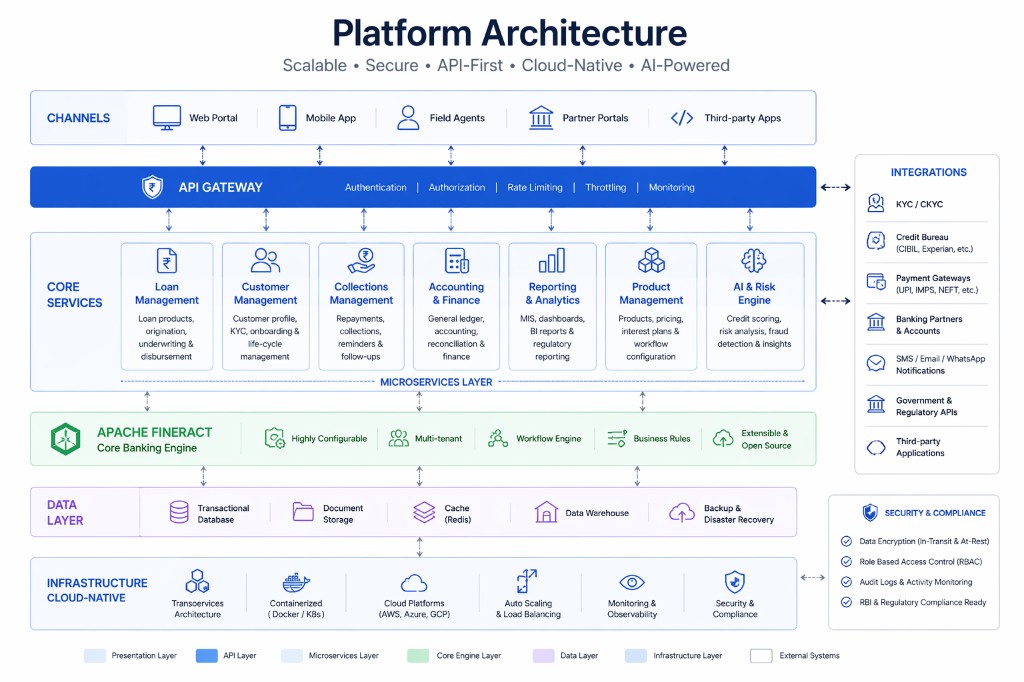
Mifos, powered by Apache Fineract, enables financial institutions to modernize banking operations with scalable, secure, and flexible core banking capabilities. However, even a perfectly configured system can experience issues if the final deployment is not planned carefully. Missing data, incomplete testing, infrastructure failures, or untrained users can lead to operational disruptions during this critical phase.
A structured go-live checklist helps organizations verify that every technical, operational, and business requirement has been completed before production deployment.
This guide provides a complete Mifos Go-Live Checklist covering infrastructure readiness, data validation, security verification, user preparedness, production deployment, monitoring, and post-go-live support to help financial institutions achieve a smooth transition.
Before scheduling production deployment, organizations should complete every activity outlined in the implementation checklist.
Internal Link:
https://intelligrow.co/blog/mifos-implementation-checklist/
Why a Go-Live Checklist is Important
The go-live phase represents the culmination of months of planning and implementation. Any unresolved issue at this stage can affect daily banking operations, customer satisfaction, and regulatory compliance.
A structured checklist helps organizations:
- Reduce deployment risks
- Validate production readiness
- Minimize downtime
- Ensure data accuracy
- Improve user confidence
- Reduce post-deployment issues
- Support regulatory compliance
- Improve customer experience
Financial institutions that follow a documented deployment process are significantly more likely to achieve a successful implementation.
Phase 1: Business Readiness
Before technical deployment begins, confirm that the organization is operationally prepared for production.
Business readiness should include:
Stakeholder Approval
Confirm approval from:
- Executive Management
- Project Sponsor
- Operations Team
- Compliance Department
- IT Team
- Finance Department
Process Validation
Verify that all business workflows have been tested and approved.
Examples include:
- Customer onboarding
- Loan application
- Loan approval
- Loan disbursement
- Savings account creation
- Deposit processing
- Cash withdrawals
- Collections
- Accounting entries
Documentation
Ensure the following documents are available:
- User Manuals
- Standard Operating Procedures (SOPs)
- Support Contacts
- Escalation Matrix
- Disaster Recovery Procedures
- Business Continuity Plan
Phase 2: Infrastructure Readiness
Production infrastructure must be fully operational before deployment.
Infrastructure verification should include:
✔ Application Servers
✔ Database Servers
✔ Storage Systems
✔ Load Balancers
✔ Firewalls
✔ SSL Certificates
✔ Monitoring Tools
✔ Backup Systems
✔ Disaster Recovery Environment
Organizations deploying Mifos on cloud infrastructure should also verify scalability and availability.
Internal Link:
https://intelligrow.co/blog/mifos-cloud-deployment-guide/
Phase 3: Application Readiness
The production application should be thoroughly validated before users access the system.
Verify:
- Latest application version deployed
- Configuration completed
- User roles created
- Branch hierarchy configured
- Financial products configured
- Accounting rules verified
- Interest calculations validated
- Approval workflows configured
Every configuration should match business requirements approved during implementation.
Organizations implementing custom modules should also validate all customized functionality.
Internal Link:
https://intelligrow.co/mifos-development/
Phase 4: Data Migration Validation
Data migration is one of the highest-risk activities before go-live.
Before approving production deployment verify:
Customer Data
- Customer records complete
- KYC information validated
- Duplicate customers removed
- Contact information verified
Loan Portfolio
Verify:
- Outstanding balances
- Repayment schedules
- Interest calculations
- Loan status
- Product mapping
Savings Accounts
Confirm:
- Account balances
- Interest configuration
- Account status
- Transaction history
Accounting Data
Verify:
- General Ledger balances
- Opening balances
- Journal entries
- Financial reports
Financial reconciliation should match the legacy banking system before production deployment.
Organizations completing migration should review the complete migration methodology before final approval.
Internal Link:
https://intelligrow.co/blog/mifos-data-migration-guide/
Phase 5: API and Integration Validation
Modern banking operations rely on multiple integrated systems.
Before go-live verify connectivity with:
- Payment Gateways
- SMS Gateway
- Email Services
- CRM Platforms
- ERP Systems
- Mobile Banking
- Internet Banking
- Credit Bureau
- eKYC Providers
- Accounting Software
Every integration should successfully process real business transactions.
Test:
✔ Authentication
✔ Data Synchronization
✔ Error Handling
✔ Retry Logic
✔ Notifications
✔ Transaction Status
Organizations integrating third-party services should also review secure API implementation practices.
Internal Link:
https://intelligrow.co/blog/mifos-api-integration-guide/
Phase 6: Security Verification
Security should be the final technical verification before production deployment.
Confirm:
✔ HTTPS Enabled
✔ SSL Certificates Installed
✔ Firewall Rules Configured
✔ User Permissions Verified
✔ Role-Based Access Control Enabled
✔ Multi-Factor Authentication (if applicable)
✔ Database Encryption Enabled
✔ Audit Logging Active
✔ Backup Encryption Verified
✔ Security Monitoring Enabled
Security vulnerabilities should be resolved before go-live approval.
Organizations should perform a final security review using established security best practices.
Internal Link:
https://intelligrow.co/blog/mifos-security-best-practices/
Phase 7: User Readiness
Technology is only successful when users are confident using it.
Verify that:
- Staff training is complete.
- Branch users have system access.
- Loan officers understand workflows.
- Finance teams can generate reports.
- Helpdesk teams are prepared.
- Training materials are available.
Conduct a final readiness meeting with department heads to confirm that users are prepared for production operations.
Phase 8: Final Go-Live Day Activities
The day of deployment is one of the most important milestones in the entire implementation project. Every activity should follow a predefined deployment plan, with clear responsibilities assigned to technical teams, business users, and management.
A deployment coordinator should oversee the entire process and maintain constant communication with all stakeholders.
Before Production Deployment
Verify the following:
✔ Legacy system transactions have been stopped.
✔ Final production database backup has been completed.
✔ Data migration has been successfully completed.
✔ Infrastructure health has been verified.
✔ APIs are operational.
✔ Monitoring tools are active.
✔ Support teams are available.
✔ Rollback procedures are documented.
No production deployment should begin unless every prerequisite has been completed successfully.
Production Deployment Steps
A structured deployment process significantly reduces operational risks.
Step 1: Enable Production Environment
Deploy the approved production version of Mifos.
Verify:
- Application availability
- Database connectivity
- HTTPS access
- Authentication services
- API endpoints
Step 2: Final Data Verification
Randomly verify migrated information.
Check:
- Customer profiles
- Loan accounts
- Savings accounts
- Branch information
- Employee accounts
- Accounting balances
Business users should validate production data before customer transactions begin.
Step 3: Verify Core Banking Operations
Perform live testing for essential banking activities.
Examples include:
- Customer registration
- Loan application
- Loan approval
- Loan disbursement
- Savings deposit
- Cash withdrawal
- Loan repayment
- Receipt generation
- Financial report generation
Successful execution confirms that the production environment is functioning correctly.
Step 4: Enable User Access
Grant production access only after validation is complete.
Verify:
- User roles
- Branch permissions
- Approval workflows
- Password policies
- Multi-level authorization
All inactive or test accounts should be removed before production access is granted.
Phase 9: Post Go-Live Monitoring
Deployment does not end when the system becomes available.
The first few weeks after implementation are often referred to as the Hypercare Period, during which technical teams closely monitor system behavior and respond quickly to issues.
Organizations should monitor:
Application Health
- Server uptime
- Response time
- CPU utilization
- Memory usage
- Disk space
Business Operations
- Customer registrations
- Loan processing
- Savings transactions
- Payment processing
- Collections
- Report generation
API Performance
Monitor:
- Response time
- Failed requests
- Authentication failures
- Timeout errors
- Integration status
Organizations integrating third-party services should continuously review API performance.
Internal Link:
https://intelligrow.co/blog/mifos-api-integration-guide/
Database Performance
Monitor:
- Query execution time
- Database locks
- Storage growth
- Connection utilization
- Replication health
Continuous monitoring enables teams to resolve issues before they impact customers.
Phase 10: Hypercare Support
Hypercare refers to the intensive support period immediately following production deployment.
Typical Hypercare activities include:
- Dedicated Support Team
- Daily Status Meetings
- Incident Tracking
- Issue Prioritization
- Performance Monitoring
- User Assistance
- Bug Fixes
- Configuration Adjustments
Many organizations maintain Hypercare support for two to four weeks after go-live, depending on project complexity.
For long-term operational stability, institutions should establish a structured support process.
Internal Link:
https://intelligrow.co/mifos-support/
Common Go-Live Mistakes
Even well-planned projects can experience challenges if important deployment activities are overlooked.
1. Skipping Final Validation
Incomplete verification often results in production issues.
Solution
Validate business data, reports, user access, and workflows before opening the system to users.
2. Poor Communication
Users may not know when the new system becomes operational.
Solution
Communicate deployment schedules, downtime windows, and support contacts well in advance.
3. Inadequate User Support
Employees may struggle with new processes during the first few days.
Solution
Provide dedicated support teams and quick-response channels throughout the Hypercare period.
4. Lack of Rollback Planning
Unexpected issues may require reverting to the previous system.
Solution
Document rollback procedures and verify backup restoration before deployment.
5. Ignoring Performance Monitoring
Small performance issues can quickly become major operational problems.
Solution
Continuously monitor infrastructure, databases, APIs, and application performance.
Internal Link:
https://intelligrow.co/blog/mifos-performance-optimization/
Mifos Go-Live Best Practices
Organizations with successful deployments consistently follow these recommendations:
✔ Complete User Acceptance Testing before deployment.
✔ Conduct multiple trial migrations.
✔ Maintain detailed deployment documentation.
✔ Keep business stakeholders involved throughout deployment.
✔ Verify backups before every migration.
✔ Establish a dedicated Hypercare support team.
✔ Monitor application performance continuously.
✔ Review security settings before production access.
✔ Schedule deployment during low business activity periods.
✔ Hold a formal Go-Live approval meeting before enabling production.
Mifos Go-Live Checklist
| ActivityStatus | |
| Business Approval Received | ☐ |
| Infrastructure Ready | ☐ |
| Production Environment Configured | ☐ |
| Application Installed | ☐ |
| Financial Products Configured | ☐ |
| Data Migration Completed | ☐ |
| Financial Reconciliation Verified | ☐ |
| API Integrations Tested | ☐ |
| User Acceptance Testing Completed | ☐ |
| Security Validation Completed | ☐ |
| Backup Verified | ☐ |
| Disaster Recovery Tested | ☐ |
| Staff Training Completed | ☐ |
| Monitoring Enabled | ☐ |
| Hypercare Team Assigned | ☐ |
| Production Deployment Completed | ☐ |
Conclusion
A successful Mifos go-live is the result of thorough planning, comprehensive testing, accurate data migration, secure infrastructure, and well-trained users. While deployment day marks the transition to production, the work does not end there. Continuous monitoring, Hypercare support, and regular system reviews are essential for maintaining stable operations and ensuring long-term success.
By following this Mifos Go-Live Checklist, Banks, NBFCs, MFIs, SACCOs, Credit Unions, and FinTech organizations can significantly reduce deployment risks, improve operational efficiency, and provide uninterrupted banking services from day one.
Whether you're implementing Mifos for the first time or upgrading an existing deployment, a structured go-live strategy will help your organization achieve a confident and successful transition.
Useful Internal Links
Mifos Implementation
https://intelligrow.co/mifos-implementation/
Mifos Implementation Checklist
https://intelligrow.co/blog/mifos-implementation-checklist/
Mifos Data Migration Guide
https://intelligrow.co/blog/mifos-data-migration-guide/
Mifos API Integration Guide
https://intelligrow.co/blog/mifos-api-integration-guide/
Mifos Security Best Practices
https://intelligrow.co/blog/mifos-security-best-practices/
Mifos Performance Optimization
https://intelligrow.co/blog/mifos-performance-optimization/
Mifos Support
FAQ
Frequently asked questions
A Mifos Go-Live Checklist is a structured list of activities that helps financial institutions verify business readiness, infrastructure, data migration, security, integrations, user training, and monitoring before deploying Mifos into production.
Related topics

Mifos
Microfinance Software Comparison: Complete Guide to Choosing the Best Platform
July 8, 2026
Mifos
Mifos vs Oracle FLEXCUBE: Complete Core Banking Software Comparison Guide
July 8, 2026
Mifos
Mifos vs Temenos: Complete Core Banking Software Comparison Guide
July 8, 2026
Mifos
Mifos vs Finacle: Complete Core Banking Software Comparison Guide
July 8, 2026
Mifos
Apache Fineract: Complete Guide to the Open Source Core Banking Engine
July 8, 2026
Mifos
Mifos Maintenance Best Practices: Complete Guide to Keeping Your Core Banking Platform Secure and Reliable
July 6, 2026
Explore Intelligrow
Related pages you may find useful
Products
Reading mifos-go-live-checklist — explore lending platform guides, product pages, and implementation resources across Intelligrow.