
Apache Fineract Security: Complete Guide to Securing Your Core Banking Platform
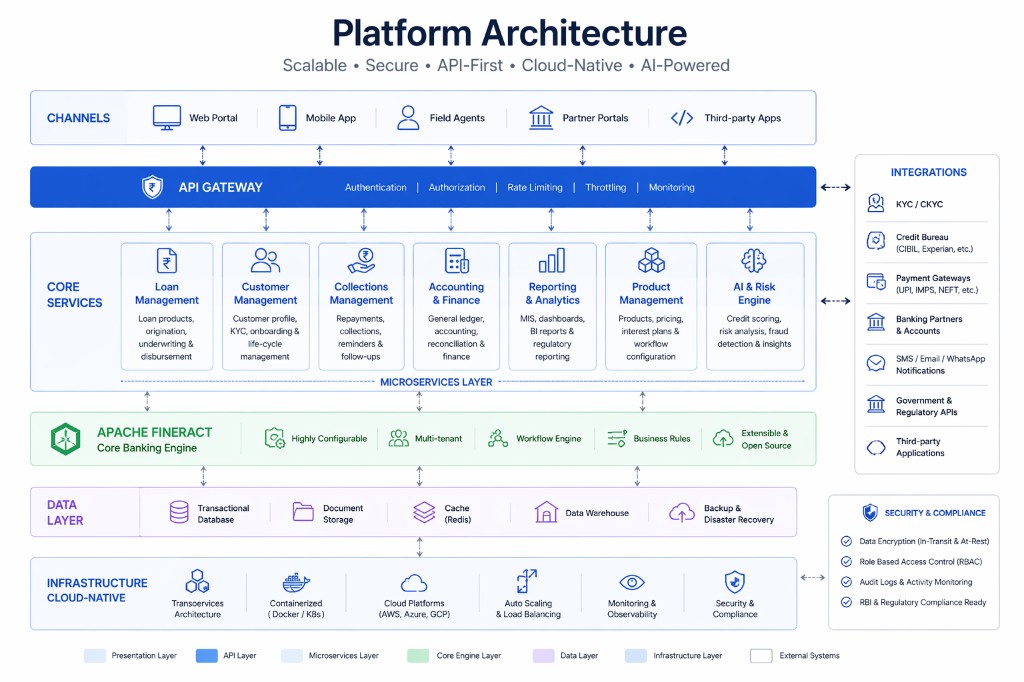
Apache Fineract Security: Complete Guide to Securing Your Core Banking Platform
Security is the foundation of every successful core banking platform. Financial institutions process highly sensitive customer information, loan portfolios, savings accounts, financial transactions, accounting records, and regulatory reports every day. Protecting this information from cyber threats, unauthorized access, fraud, and data breaches is essential for maintaining customer trust and regulatory compliance.
Apache Fineract, developed under the Apache Software Foundation, provides a secure and flexible foundation for modern digital banking. Its architecture incorporates multiple layers of security, including authentication, authorization, encryption, audit logging, and API protection. However, achieving enterprise-grade security requires proper implementation, infrastructure hardening, continuous monitoring, and regular security assessments.
Whether deployed by Banks, NBFCs, Microfinance Institutions (MFIs), SACCOs, Credit Unions, Cooperatives, or FinTech companies, Apache Fineract can be secured to meet demanding operational and regulatory requirements.
This guide explains the security architecture of Apache Fineract, common security threats, implementation best practices, compliance considerations, and strategies for maintaining a secure core banking environment.
Before implementing security controls, organizations should establish a stable Apache Fineract deployment.
Internal Link:
https://intelligrow.co/mifos-implementation/
Why Security is Critical for Core Banking
Core banking systems are attractive targets for cybercriminals because they contain valuable financial and customer data.
Poor security can lead to:
- Data Breaches
- Financial Fraud
- Unauthorized Transactions
- Regulatory Penalties
- Service Disruptions
- Reputation Damage
- Customer Trust Loss
- Business Continuity Risks
A well-designed security strategy helps organizations:
- Protect Customer Information
- Secure Financial Transactions
- Prevent Unauthorized Access
- Maintain Regulatory Compliance
- Improve Business Continuity
- Strengthen Customer Confidence
Security should be considered throughout the entire lifecycle of the platform—from implementation and customization to upgrades and ongoing maintenance.
Security Architecture of Apache Fineract
Apache Fineract follows a layered security model that protects every major component of the platform.
The security architecture includes:
- User Authentication
- Authorization
- Role-Based Access Control (RBAC)
- REST API Security
- Data Encryption
- Secure Communication
- Audit Logging
- Infrastructure Security
Each layer contributes to protecting sensitive banking operations.
Authentication
Authentication verifies the identity of users before granting access.
Apache Fineract supports secure authentication mechanisms such as:
- Username & Password Authentication
- OAuth 2.0
- Token-Based Authentication
- Session Management
- Multi-Factor Authentication (via integrated identity providers)
Strong password policies should include:
- Minimum Password Length
- Password Complexity
- Password Expiration
- Account Lockout
- Login Attempt Limits
Implementing Multi-Factor Authentication (MFA) provides an additional layer of protection.
Role-Based Access Control (RBAC)
Not every user should have access to every function.
Apache Fineract uses Role-Based Access Control (RBAC) to assign permissions based on job responsibilities.
Typical user roles include:
- System Administrator
- Branch Manager
- Loan Officer
- Teller
- Finance Manager
- Compliance Officer
- Auditor
RBAC minimizes insider risks while ensuring users access only the information necessary for their roles.
API Security
Apache Fineract follows an API-first architecture, making API security a top priority.
API security measures include:
- HTTPS Encryption
- OAuth Authentication
- Access Tokens
- Role-Based Permissions
- Input Validation
- API Rate Limiting
- Request Logging
Organizations integrating mobile banking, payment gateways, or third-party applications should implement secure API governance.
Internal Link:
https://intelligrow.co/blog/apache-fineract-apis/
Data Encryption
Sensitive financial data should be protected both during transmission and while stored.
Recommended encryption practices include:
Data in Transit
Protect communication using:
- HTTPS
- SSL/TLS Certificates
- Secure API Connections
Data at Rest
Protect stored information using:
- Database Encryption
- Encrypted Backups
- Secure Storage
- Key Management
Encryption significantly reduces the impact of unauthorized data access.
Audit Logging
Audit logs are essential for security investigations, compliance, and operational transparency.
Apache Fineract can maintain logs for:
- User Logins
- Configuration Changes
- Loan Approvals
- Savings Transactions
- User Management
- API Access
- Administrative Activities
Comprehensive logging enables organizations to detect suspicious activity and support regulatory audits.
Infrastructure Security
Infrastructure forms the foundation of platform security.
Organizations should secure:
- Application Servers
- Database Servers
- Firewalls
- Network Segmentation
- Backup Servers
- Cloud Infrastructure
Additional recommendations include:
- Regular Security Patching
- Secure SSH Access
- Intrusion Detection
- Vulnerability Scanning
- Endpoint Protection
Proper infrastructure hardening significantly reduces attack surfaces.
Common Security Threats
Financial institutions should prepare for threats such as:
- Phishing Attacks
- Credential Theft
- SQL Injection
- Cross-Site Scripting (XSS)
- Distributed Denial of Service (DDoS)
- Insider Threats
- Malware
- Ransomware
A layered defense strategy helps minimize these risks.
Security During Implementation
Security should be incorporated from the beginning of every Apache Fineract implementation.
Key implementation activities include:
- Secure Infrastructure Setup
- Role Definition
- User Access Planning
- API Security Configuration
- SSL Certificate Installation
- Database Hardening
- Backup Configuration
- Security Testing
Organizations should validate every security control before production deployment.
Common Security Challenges
Organizations commonly encounter:
- Weak Password Policies
- Excessive User Permissions
- Unsecured APIs
- Delayed Security Updates
- Inadequate Monitoring
- Poor Backup Protection
- Misconfigured Cloud Resources
- Compliance Gaps
Addressing these challenges early reduces operational and cybersecurity risks.
Internal Link:
https://intelligrow.co/blog/common-mifos-implementation-challenges/
Apache Fineract Security Best Practices
A secure Apache Fineract implementation requires more than enabling authentication or installing SSL certificates. Financial institutions should adopt a comprehensive security strategy that covers people, processes, infrastructure, applications, APIs, and data.
The following best practices help organizations maintain a secure and resilient core banking environment.
✔ Implement Strong Authentication
Every user accessing Apache Fineract should be authenticated securely.
Recommended practices include:
- Multi-Factor Authentication (MFA)
- Strong Password Policies
- Password Expiration
- Account Lockout Policies
- Secure Session Management
These controls reduce the risk of unauthorized access and credential theft.
✔ Apply the Principle of Least Privilege
Users should receive only the permissions required to perform their responsibilities.
Examples include:
- Branch Managers
- Loan Officers
- Finance Teams
- Auditors
- Compliance Officers
- System Administrators
Regularly review user roles and remove unnecessary privileges to reduce insider threats.
✔ Secure APIs
Since Apache Fineract relies heavily on REST APIs, API protection is critical.
Recommended API security measures include:
- OAuth 2.0 Authentication
- HTTPS Encryption
- API Rate Limiting
- Access Tokens
- Input Validation
- API Logging
- IP Whitelisting
Regular API security testing helps identify vulnerabilities before they are exploited.
Internal Link:
https://intelligrow.co/blog/apache-fineract-apis/
✔ Encrypt Sensitive Data
Customer information and financial transactions should remain protected throughout their lifecycle.
Organizations should encrypt:
- Customer Data
- Loan Records
- Savings Accounts
- Financial Reports
- Database Backups
- API Communication
Encryption protects sensitive information even if unauthorized access occurs.
✔ Maintain Regular Security Updates
Software vulnerabilities are continually discovered and addressed.
Organizations should regularly apply:
- Apache Fineract Updates
- Operating System Patches
- Java Updates
- Database Updates
- Security Libraries
- Third-Party Component Updates
Routine patch management significantly reduces cybersecurity risks.
Compliance and Regulatory Requirements
Financial institutions operate under strict regulatory frameworks that require secure handling of customer data and financial records.
Apache Fineract supports compliance initiatives through:
- Audit Trails
- Role-Based Access Control
- Data Encryption
- Transaction Logging
- User Activity Monitoring
- Secure APIs
Depending on the country and industry, organizations may also need to comply with regulations related to:
- Data Privacy
- Financial Reporting
- Customer Due Diligence (CDD)
- Know Your Customer (KYC)
- Anti-Money Laundering (AML)
- Cybersecurity Standards
Compliance requirements should be incorporated into implementation and operational procedures.
Cloud Security
Many organizations deploy Apache Fineract on cloud infrastructure.
Cloud deployments require additional security controls.
Recommended practices include:
- Virtual Private Clouds (VPCs)
- Network Segmentation
- Web Application Firewalls (WAF)
- Cloud Identity Management
- Encrypted Storage
- Secure Backups
- Multi-Region Disaster Recovery
Cloud providers also offer monitoring and threat detection services that enhance platform security.
Organizations should review cloud security configurations regularly.
Internal Link:
https://intelligrow.co/blog/mifos-cloud-deployment-guide/
Security Monitoring and Incident Response
Continuous monitoring enables organizations to identify suspicious activities quickly.
Monitor:
User Activity
- Failed Login Attempts
- Password Changes
- Role Modifications
- Privileged User Actions
API Activity
- Authentication Failures
- Rate Limit Violations
- Unusual Traffic
- Invalid Requests
Infrastructure
- CPU Usage
- Memory Usage
- Firewall Logs
- Network Traffic
- Storage Capacity
Application
- Error Logs
- Transaction Failures
- Unauthorized Access Attempts
- Configuration Changes
Organizations should establish a documented incident response plan that defines:
- Incident Detection
- Escalation Procedures
- Containment
- Investigation
- Recovery
- Post-Incident Review
Rapid incident response minimizes operational disruption and protects customer data.
Security Testing
Security should be validated continuously rather than only during implementation.
Recommended testing activities include:
- Vulnerability Assessments
- Penetration Testing
- API Security Testing
- Configuration Reviews
- Access Control Validation
- Backup Restoration Testing
Regular testing helps identify weaknesses before attackers can exploit them.
Why Choose Intelligrow for Apache Fineract Security?
Securing a modern core banking platform requires expertise in banking technology, cybersecurity, cloud infrastructure, compliance, and enterprise architecture.
Intelligrow helps financial institutions implement comprehensive security strategies for Apache Fineract.
Our security services include:
- Security Architecture Design
- Apache Fineract Security Assessment
- API Security Implementation
- Infrastructure Hardening
- Cloud Security
- Identity & Access Management
- Security Audits
- Penetration Testing Support
- Compliance Consulting
- Disaster Recovery Planning
- Ongoing Security Monitoring
Our specialists help Banks, NBFCs, MFIs, SACCOs, Credit Unions, Cooperatives, and FinTech companies build highly secure digital banking platforms that protect customer data and maintain regulatory compliance.
Apache Fineract Security Checklist
| ActivityStatus | |
| Security Requirements Documented | ☐ |
| Strong Authentication Enabled | ☐ |
| Role-Based Access Control Configured | ☐ |
| APIs Secured | ☐ |
| SSL/TLS Certificates Installed | ☐ |
| Database Encryption Enabled | ☐ |
| Backup Encryption Configured | ☐ |
| Security Patches Applied | ☐ |
| Vulnerability Assessment Completed | ☐ |
| Penetration Testing Performed | ☐ |
| Monitoring & Alerting Enabled | ☐ |
| Incident Response Plan Prepared | ☐ |
| Compliance Review Completed | ☐ |
| Security Documentation Updated | ☐ |
Conclusion
Security is a continuous process that extends beyond software installation. Apache Fineract provides a strong foundation for secure core banking through role-based access control, secure APIs, encryption, audit logging, and a flexible architecture. However, achieving enterprise-grade security requires ongoing monitoring, regular updates, secure infrastructure, and disciplined operational practices.
By implementing layered security controls, maintaining compliance, protecting cloud environments, and performing regular security assessments, Banks, NBFCs, MFIs, SACCOs, Credit Unions, Cooperatives, and FinTech companies can safeguard customer information, reduce cybersecurity risks, and maintain business continuity.
Partnering with an experienced implementation provider like Intelligrow ensures that Apache Fineract is deployed and maintained according to industry best practices, enabling organizations to build trusted, resilient, and future-ready digital banking platforms.
Useful Internal Links
Mifos Implementation
https://intelligrow.co/mifos-implementation/
Apache Fineract APIs
https://intelligrow.co/blog/apache-fineract-apis/
Mifos Cloud Deployment Guide
https://intelligrow.co/blog/mifos-cloud-deployment-guide/
Mifos Security Best Practices
https://intelligrow.co/blog/mifos-security-best-practices/
Mifos Performance Optimization
https://intelligrow.co/blog/mifos-performance-optimization/
Mifos Upgrade Guide
https://intelligrow.co/blog/mifos-upgrade-guide/
Mifos Consulting
FAQ
Frequently asked questions
Apache Fineract secures banking data through role-based access control, secure authentication, HTTPS encryption, API protection, audit logging, database encryption, and configurable security policies that help protect customer information and financial transactions.
Related topics
Apache Fineract
Apache Fineract vs Legacy Core Banking: Complete Modernization Comparison Guide
July 8, 2026
Apache Fineract
Mifos and Apache Fineract Explained: Understanding the Relationship Between Mifos and Apache Fineract
July 7, 2026
Apache Fineract
Apache Fineract Best Practices: Complete Guide for Successful Core Banking Implementation
July 7, 2026
Apache Fineract
Apache Fineract Upgrade Guide: Complete Guide to Upgrading Your Core Banking Platform
July 7, 2026
Apache Fineract
Apache Fineract Scaling: Complete Guide to Scaling Core Banking Systems
July 7, 2026
Apache Fineract
Apache Fineract Database Design: Complete Guide to Core Banking Database Architecture
July 7, 2026
Explore Intelligrow
Related pages you may find useful
Products
Reading apache-fineract-security — explore lending platform guides, product pages, and implementation resources across Intelligrow.