
Apache Fineract vs Proprietary Core Banking: Which Core Banking Platform is Right for Your Financial Institution?
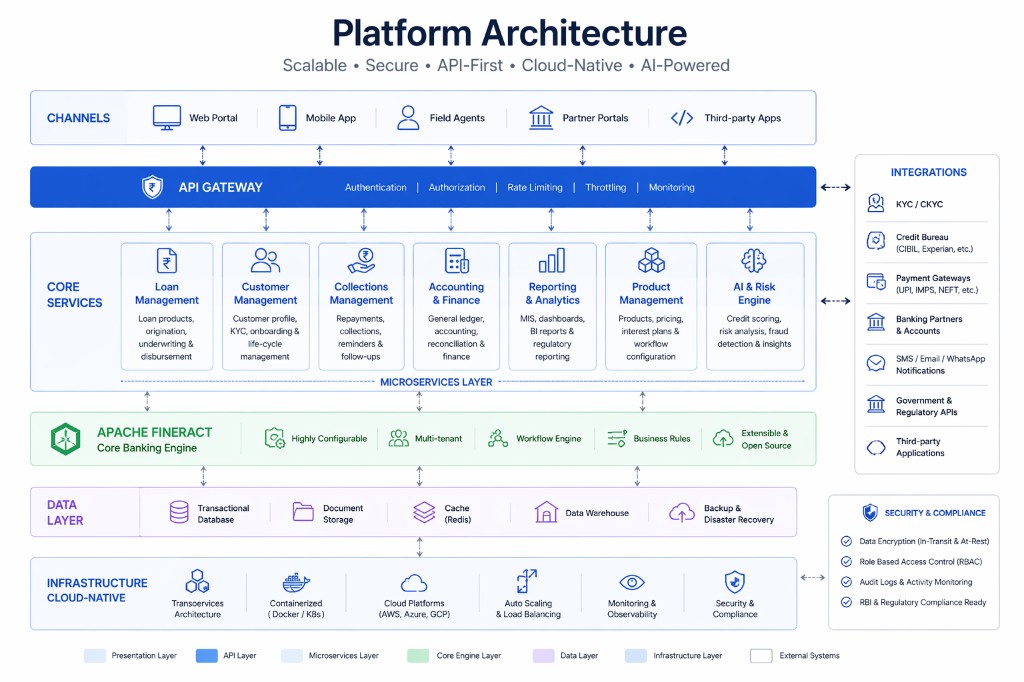
Apache Fineract vs Proprietary Core Banking: Which Core Banking Platform is Right for Your Financial Institution?
The financial services industry is undergoing rapid digital transformation. Customers now expect instant account opening, digital lending, mobile banking, real-time payments, and personalized financial services. To meet these expectations, financial institutions require a modern, scalable, and flexible core banking platform that supports innovation while maintaining security and regulatory compliance.
When selecting a core banking solution, organizations often compare two primary approaches: open-source platforms such as Apache Fineract and proprietary core banking systems offered by commercial vendors.
Both options provide essential banking capabilities such as customer management, loan processing, savings management, accounting, and reporting. However, they differ significantly in licensing costs, flexibility, customization, deployment models, ownership, implementation timelines, and long-term maintenance.
Apache Fineract has become a popular choice among Banks, NBFCs, Microfinance Institutions (MFIs), SACCOs, Credit Unions, Cooperatives, and FinTech companies because of its open architecture, API-first design, and lower total cost of ownership.
This guide compares Apache Fineract with proprietary core banking platforms to help organizations make an informed technology decision.
Before comparing platforms, organizations should understand how Apache Fineract works.
Internal Link:
https://intelligrow.co/blog/what-is-apache-fineract/
What is Apache Fineract?
Apache Fineract is an open-source core banking platform developed under the Apache Software Foundation.
It provides banking capabilities including:
- Customer Management
- Loan Management
- Savings Products
- Accounting
- Financial Transactions
- Reporting
- REST APIs
Apache Fineract serves as the backend engine for banking applications such as Mifos and custom digital banking platforms.
Organizations have complete access to the source code, allowing extensive customization and integration.
What is Proprietary Core Banking?
Proprietary core banking platforms are commercial software products developed and maintained by private vendors.
Examples include enterprise banking platforms offered by well-known technology providers.
These systems typically include:
- Customer Management
- Deposits
- Lending
- Payments
- Treasury
- Reporting
- Compliance Tools
Organizations purchase licenses and depend on the software vendor for product updates, support, and feature development.
Apache Fineract vs Proprietary Core Banking: Feature Comparison
| FeatureApache FineractProprietary Core Banking | ||
| Licensing | Open Source | Commercial License |
| Source Code Access | Full Access | Restricted |
| Vendor Lock-In | No | Yes |
| Customization | Extensive | Limited by Vendor |
| APIs | REST API-First | Varies by Vendor |
| Cloud Deployment | Native Support | Usually Supported |
| Infrastructure Flexibility | High | Moderate |
| Community Support | Strong Open-Source Community | Vendor Support |
| Cost | Lower Total Cost | Higher Licensing Cost |
1. Cost Comparison
One of the biggest differences between Apache Fineract and proprietary solutions is cost.
Apache Fineract
Organizations generally pay for:
- Implementation
- Customization
- Infrastructure
- Support
- Maintenance
There are no software licensing fees.
Proprietary Platforms
Organizations typically incur:
- License Fees
- Annual Maintenance Fees
- Upgrade Costs
- Vendor Support Costs
- Additional Module Charges
Over time, licensing and maintenance expenses can significantly increase the total cost of ownership.
Organizations seeking long-term cost efficiency often consider Apache Fineract an attractive alternative.
2. Flexibility
Apache Fineract provides exceptional flexibility.
Organizations can:
- Modify Business Logic
- Add Features
- Build APIs
- Develop New Products
- Integrate Third-Party Systems
Proprietary systems usually restrict modifications to vendor-supported configurations.
This limits innovation and often increases dependence on the software vendor.
3. Customization
Every financial institution has unique operational requirements.
Apache Fineract allows customization of:
- Loan Products
- Savings Products
- Approval Workflows
- Reports
- APIs
- User Interfaces
- Business Rules
Organizations can tailor the platform to their specific business processes.
Internal Link:
https://intelligrow.co/blog/apache-fineract-customization/
4. API Integration
Modern banking depends heavily on integrations.
Apache Fineract provides a comprehensive REST API framework that simplifies integration with:
- Mobile Banking
- Internet Banking
- CRM Platforms
- ERP Software
- Payment Gateways
- eKYC Providers
- Credit Bureaus
Many proprietary platforms also support APIs, but implementation flexibility may vary depending on the vendor.
Internal Link:
https://intelligrow.co/blog/apache-fineract-apis/
5. Deployment Flexibility
Apache Fineract supports multiple deployment models.
Organizations can deploy:
- On-Premises
- Public Cloud
- Private Cloud
- Hybrid Cloud
This flexibility enables institutions to choose infrastructure that aligns with regulatory and operational requirements.
Most proprietary vendors also support cloud deployment but may impose infrastructure or licensing restrictions.
Internal Link:
https://intelligrow.co/blog/mifos-cloud-deployment-guide/
6. Vendor Lock-In
Vendor lock-in is an important consideration when selecting a banking platform.
With Apache Fineract:
- Organizations control the source code.
- Multiple implementation partners are available.
- Internal development teams can extend the platform.
- Migration between service providers is easier.
With proprietary platforms:
- Organizations depend heavily on the software vendor.
- Customizations often require vendor approval.
- Switching vendors may be expensive and time-consuming.
Reducing vendor dependency provides greater long-term strategic flexibility.
7. Scalability
Apache Fineract is designed to support organizations ranging from small MFIs to enterprise-scale financial institutions.
Scalability features include:
- Cloud Deployment
- REST APIs
- Multi-Tenant Support
- Horizontal Scaling
- High Availability
Most proprietary platforms also offer enterprise scalability, though scaling costs may increase with additional licenses and infrastructure.
8. Security
Both Apache Fineract and proprietary platforms can provide strong security when implemented correctly.
Apache Fineract supports:
- Role-Based Access Control (RBAC)
- HTTPS Encryption
- OAuth Authentication
- Audit Logging
- API Security
- Database Encryption
The overall security of either platform depends on proper implementation, maintenance, and operational governance.
Internal Link:
https://intelligrow.co/blog/apache-fineract-security/
Which Platform is Best for Your Organization?
Apache Fineract is often well suited for organizations that:
- Need extensive customization
- Want to avoid vendor lock-in
- Prefer open-source technology
- Require API-driven integrations
- Plan to innovate rapidly
- Seek lower long-term ownership costs
A proprietary platform may be appropriate for organizations that:
- Prefer a vendor-managed ecosystem
- Have limited internal technical resources
- Need a packaged solution with vendor-defined functionality
- Are comfortable with commercial licensing and long-term vendor support
The right choice depends on business goals, technical capabilities, regulatory requirements, budget, and long-term digital transformation strategy.
Common Evaluation Challenges
Organizations evaluating core banking platforms often face:
- Budget Constraints
- Complex Business Requirements
- Integration Needs
- Data Migration Planning
- Vendor Selection
- Security Assessment
- Regulatory Compliance
- Long-Term Scalability
A structured evaluation process helps identify the platform that best aligns with organizational objectives.
Internal Link:
https://intelligrow.co/blog/choosing-a-mifos-implementation-partner/
Implementation Comparison
The implementation approach differs significantly between Apache Fineract and proprietary core banking platforms. Understanding these differences helps financial institutions estimate project timelines, costs, resource requirements, and deployment risks.
Apache Fineract Implementation
Apache Fineract implementations generally follow a structured approach that includes:
- Business Requirement Analysis
- Solution Architecture
- Infrastructure Planning
- Product Configuration
- API Integration
- Data Migration
- User Acceptance Testing (UAT)
- Production Go-Live
Since Apache Fineract is highly configurable and extensible, organizations can prioritize features and implement them in phases.
Internal Link:
https://intelligrow.co/blog/apache-fineract-installation/
Proprietary Core Banking Implementation
Commercial core banking platforms typically follow vendor-defined implementation methodologies.
Projects generally include:
- Vendor Workshops
- Product Configuration
- Licensed Module Setup
- Data Migration
- Vendor Testing
- User Training
- Production Deployment
While proprietary vendors provide structured implementation support, customization often requires vendor involvement, which can increase project duration and cost.
Performance Comparison
Performance depends on system architecture, infrastructure, database optimization, and implementation quality rather than licensing model alone.
Apache Fineract
Apache Fineract offers:
- REST API Architecture
- Horizontal Scaling
- Cloud-Native Deployment
- High Availability
- Database Optimization
- Performance Monitoring
Organizations can optimize infrastructure according to business growth without waiting for vendor upgrades.
Internal Link:
https://intelligrow.co/blog/apache-fineract-performance/
Proprietary Platforms
Commercial platforms generally provide:
- Enterprise Performance
- Vendor Performance Tuning
- Integrated Monitoring
- Certified Infrastructure
However, optimization options may depend on vendor tools and licensing agreements.
Maintenance and Upgrade Comparison
Maintenance is an ongoing requirement for every core banking platform.
Apache Fineract
Organizations have complete control over:
- Upgrade Schedule
- Security Updates
- Infrastructure Maintenance
- Database Optimization
- Performance Improvements
- API Enhancements
This flexibility enables institutions to align upgrades with business priorities.
Proprietary Platforms
Maintenance usually depends on the software vendor.
Typical activities include:
- Vendor Release Cycles
- Annual Maintenance Contracts
- Vendor Support
- Licensed Upgrades
- Scheduled Product Releases
Organizations often have less flexibility regarding upgrade timing.
Internal Link:
https://intelligrow.co/blog/mifos-maintenance-best-practices/
Community vs Vendor Ecosystem
Another important difference is the support ecosystem.
Apache Fineract
Benefits include:
- Open-Source Community
- Global Contributors
- Transparent Development
- Multiple Implementation Partners
- No Vendor Dependency
Organizations can choose implementation partners based on expertise and business requirements.
Proprietary Platforms
Support generally includes:
- Dedicated Vendor Support
- Official Documentation
- Certified Partners
- Commercial SLAs
- Managed Upgrades
This model may be suitable for organizations that prefer a single vendor relationship.
When Should You Choose Apache Fineract?
Apache Fineract is an excellent choice if your organization wants:
- Lower Total Cost of Ownership
- Open-Source Technology
- Extensive Customization
- API-First Architecture
- Cloud Deployment
- Freedom from Vendor Lock-In
- Faster Digital Innovation
- Flexible Product Development
It is particularly suitable for:
- Banks
- NBFCs
- MFIs
- SACCOs
- Credit Unions
- Cooperatives
- FinTech Companies
- Digital Lenders
When Should You Consider a Proprietary Core Banking Platform?
A proprietary solution may be appropriate if your organization:
- Prefers a fully vendor-managed platform
- Requires commercially packaged modules
- Has limited internal technical expertise
- Wants long-term vendor-managed support
- Has an existing relationship with a commercial banking software provider
The final decision should balance business objectives, budget, technical capabilities, regulatory requirements, and long-term growth plans.
Best Practices for Choosing the Right Core Banking Platform
Before selecting any platform, organizations should complete a structured evaluation.
✔ Define Business Objectives
Document:
- Customer Segments
- Financial Products
- Growth Strategy
- Regulatory Requirements
- Digital Banking Goals
✔ Evaluate Total Cost of Ownership
Compare:
- Licensing Costs
- Infrastructure Costs
- Implementation Costs
- Maintenance Costs
- Upgrade Costs
- Support Costs
Avoid making decisions based solely on initial implementation expenses.
✔ Review Integration Requirements
Identify systems requiring integration:
- Mobile Banking
- Internet Banking
- Payment Gateways
- CRM
- ERP
- eKYC
- Credit Bureau
- Analytics Platforms
API flexibility should be a key evaluation factor.
✔ Consider Future Scalability
Choose a platform capable of supporting:
- Customer Growth
- Branch Expansion
- Higher Transaction Volumes
- New Financial Products
- Digital Channels
Future scalability reduces long-term migration costs.
✔ Assess Security and Compliance
Ensure the platform supports:
- Role-Based Access Control
- Encryption
- Audit Logging
- API Security
- Regulatory Reporting
- Disaster Recovery
Security should remain a top evaluation criterion.
Why Choose Intelligrow?
Choosing a core banking platform is a strategic decision that affects every aspect of digital banking operations.
Intelligrow helps financial institutions evaluate, implement, customize, and optimize Apache Fineract-based core banking solutions.
Our services include:
- Core Banking Consulting
- Apache Fineract Implementation
- Solution Architecture
- Business Process Analysis
- API Integration
- Data Migration
- Cloud Deployment
- Performance Optimization
- Security Consulting
- Ongoing Support & Maintenance
Our experts help Banks, NBFCs, MFIs, SACCOs, Credit Unions, Cooperatives, and FinTech companies implement future-ready digital banking platforms that maximize flexibility while minimizing long-term operational costs.
Apache Fineract vs Proprietary Core Banking Decision Checklist
| Evaluation AreaStatus | |
| Business Requirements Defined | ☐ |
| Current System Evaluated | ☐ |
| Budget Approved | ☐ |
| Infrastructure Planned | ☐ |
| Integration Requirements Identified | ☐ |
| Security Requirements Reviewed | ☐ |
| Compliance Requirements Assessed | ☐ |
| Scalability Evaluated | ☐ |
| Implementation Partner Selected | ☐ |
| Data Migration Strategy Prepared | ☐ |
| Training Plan Created | ☐ |
| Go-Live Strategy Approved | ☐ |
| Support Model Finalized | ☐ |
| Long-Term Roadmap Documented | ☐ |
Conclusion
Apache Fineract and proprietary core banking platforms both provide the essential capabilities needed to manage modern financial institutions. However, they differ significantly in licensing, flexibility, customization, deployment, vendor dependency, and long-term costs.
Apache Fineract stands out with its open-source foundation, API-first architecture, cloud readiness, and freedom from vendor lock-in, making it an ideal choice for organizations seeking innovation, scalability, and lower total cost of ownership. Proprietary platforms may be better suited for institutions that prefer a fully vendor-managed ecosystem and are comfortable with commercial licensing models.
By carefully evaluating business requirements, technical capabilities, integration needs, compliance obligations, and growth plans, financial institutions can choose the platform that best supports their digital transformation strategy.
Partnering with an experienced implementation provider like Intelligrow helps ensure successful planning, implementation, and long-term optimization regardless of the chosen deployment model.
Useful Internal Links
What is Apache Fineract?
https://intelligrow.co/blog/what-is-apache-fineract/
Apache Fineract Installation
https://intelligrow.co/blog/apache-fineract-installation/
Apache Fineract APIs
https://intelligrow.co/blog/apache-fineract-apis/
Apache Fineract Customization
https://intelligrow.co/blog/apache-fineract-customization/
Apache Fineract Performance
https://intelligrow.co/blog/apache-fineract-performance/
Apache Fineract Security
https://intelligrow.co/blog/apache-fineract-security/
Mifos Implementation
FAQ
Frequently asked questions
The biggest advantage is its open-source architecture, which provides complete access to the source code, extensive customization, API-first integration capabilities, lower licensing costs, and freedom from vendor lock-in.
Related topics
Apache Fineract
Apache Fineract vs Legacy Core Banking: Complete Modernization Comparison Guide
July 8, 2026
Apache Fineract
Mifos and Apache Fineract Explained: Understanding the Relationship Between Mifos and Apache Fineract
July 7, 2026
Apache Fineract
Apache Fineract Best Practices: Complete Guide for Successful Core Banking Implementation
July 7, 2026
Apache Fineract
Apache Fineract Upgrade Guide: Complete Guide to Upgrading Your Core Banking Platform
July 7, 2026
Apache Fineract
Apache Fineract Scaling: Complete Guide to Scaling Core Banking Systems
July 7, 2026
Apache Fineract
Apache Fineract Database Design: Complete Guide to Core Banking Database Architecture
July 7, 2026
Explore Intelligrow
Related pages you may find useful
Products
Reading apache-fineract-vs-proprietary-core-banking — explore lending platform guides, product pages, and implementation resources across Intelligrow.